Why Webtoons Became K-Drama’s New Development Engine
The 2026 adaptation wave shows how reader data, OTT demand and global fandoms now shape Korean drama commissioning.
 By Baek Seoyun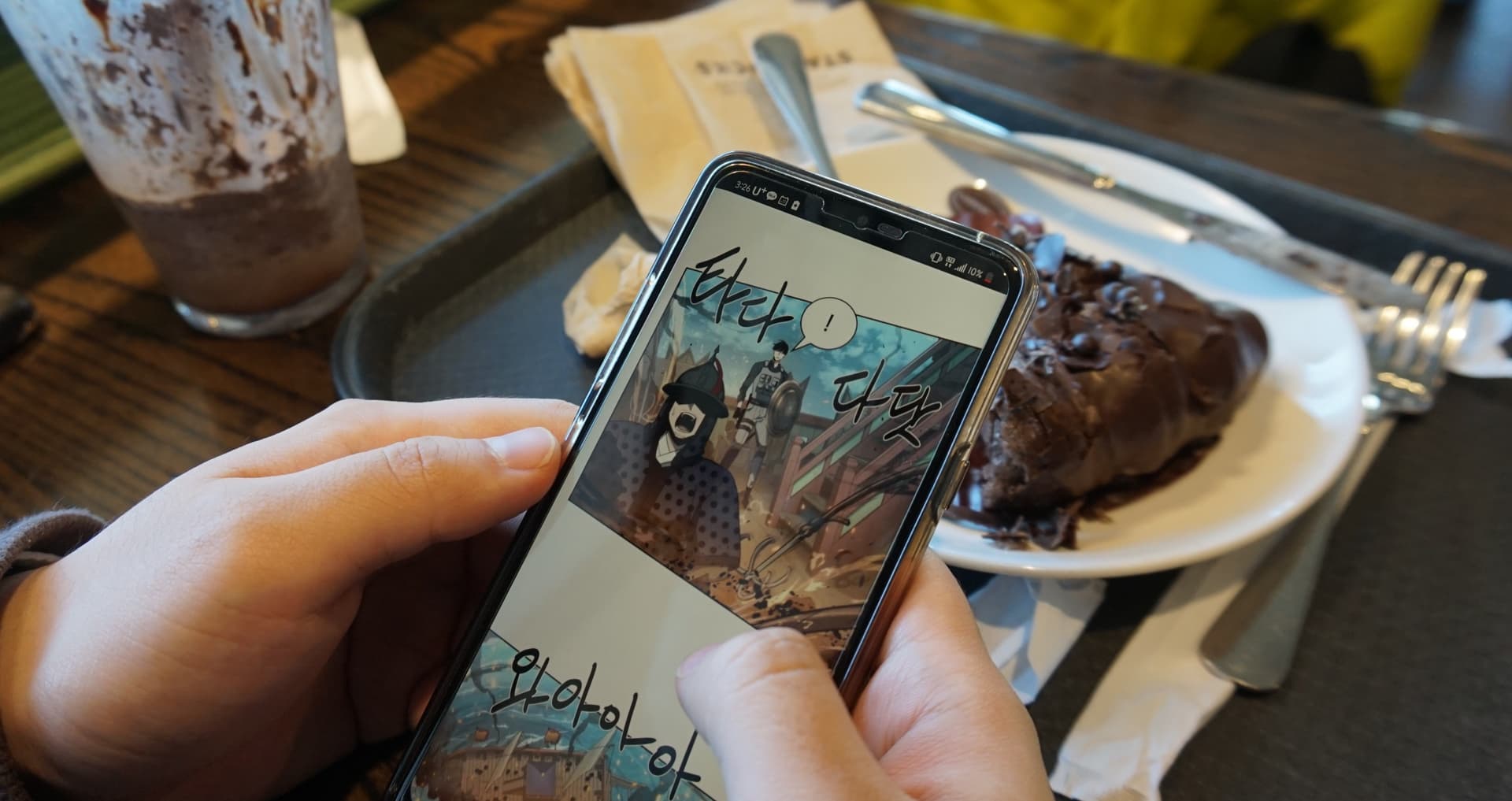
K-drama’s safest bet in 2026 is no longer a star alone.
It is a story that has already survived the scroll. The surge of webtoon and web-novel adaptations across Korean television and streaming now points to a larger industry shift: producers are using reader data as a form of early audience testing, while platforms are learning that screen exposure can send viewers back to the original comic. This article analyzes how Korean webtoon IP moved from useful source material to a core development engine for K-drama, and why the numbers show both momentum and caution.
The clearest signal came this week. Sports Seoul reported on September 16, 2026, that more than 70 K-story IP screen projects, including webtoons and web novels, have been adapted or moved into production this year. Chosun English, in a September 12, 2026 report, framed the count even more broadly, saying K-webtoons now power 86 dramas and that webtoon sales have topped 3.6 trillion won. Those figures do not mean every adaptation will work. They do mean the commissioning logic has changed.
Why Producers Keep Returning To Proven IP
The industry has seen source material cycles before, from novels to films and from films to television. Webtoons are different because the feedback is granular and continuous. A platform can see when readers drop out, which character generates comments, which languages convert into paid engagement and which genre travels beyond Korea. That does not remove creative uncertainty, but it gives studios a richer risk profile than a pitch document or a pilot script can offer.
There is also a timing factor. K-drama production has become more expensive as global platforms compete for premium casts, cinematic genre work and simultaneous international distribution. In that environment, a story with pre-existing overseas readers looks attractive before any marketing spend begins. The source IP becomes part of the business case, not just the creative inspiration. That explains why the adaptation wave is broad rather than confined to one hit genre.
The appeal of a webtoon is not simply that it has a plot. A successful webtoon arrives with visible demand: repeat readers, comments, paid episodes, demographic signals and, increasingly, overseas response before a camera has rolled. That changes the risk calculation. A producer still has to solve casting, pacing and tone, but the early question of whether anyone cares about the premise has partly been answered.
But that insurance has a cost. When more buyers chase the same kind of pre-tested property, originality can narrow into a development formula. The recent wave includes action, thriller, school stories, medical dramas, fantasy and crime titles, a much wider field than the early romance-heavy adaptation cycle. Still, the common logic is similar: bring a known fan base into a high-cost drama market where failure has become harder to absorb.
That is why the trend matters beyond one title. Netflix-focused tracking sites have listed several Korean adaptations for 2026 and beyond, including Mousetrap, Take Charge of My Heart, Granny, later seasons of Trauma Code, Solo Leveling, Men of the Harem, Outback and All of Us Are Dead season two. The slate shows that webtoon IP is no longer a side lane. It is part of the main road into global K-drama programming.
The Data Shows A Flywheel, Not A Guarantee
The number of projects also changes the bargaining position of creators and platforms. When a platform can point to a large pool of proven titles, it can build a pipeline rather than gamble on isolated acquisitions. At the same time, the strongest IP owners can negotiate from evidence: readership, paid conversion, language performance and fan communities. Those metrics do not guarantee a better drama, but they can influence which stories receive budgets, marketing windows and international distribution partners.
This is why the distinction between webtoon and web novel matters less to television buyers than it might to readers. Both formats function as narrative laboratories. A property that has held attention across dozens or hundreds of installments has already solved one of scripted television's hardest problems: sustaining curiosity. The screen adaptation then has to solve a different problem, translating that long attention span into a tighter emotional architecture.
What makes the 2026 moment different is that the adaptation effect can be measured in both directions. Sports Seoul and Chosun both pointed to Manager Kim, adapted as Agent Kim Reactivated, as a case where screen exposure reportedly sent original webtoon views up by eight times in English and twelve times in Traditional Chinese. That is more than a publicity bump. It suggests a loop in which a drama markets the comic, the comic deepens the fandom, and the expanded fandom improves the value of future licensing.
WEBTOON Entertainment’s own Q2 2026 numbers give that loop a more complicated shape. In results released on August 10, 2026, the company reported $338.5 million in total revenue for the quarter, down from $348.271 million in Q2 2025. Yet on a constant-currency basis, revenue moved from $348.271 million in Q2 2025 to $366.394 million in Q2 2026, a 5.2% increase. The same period therefore tells two stories at once: foreign-exchange pressure in reported revenue, but underlying growth when currency noise is stripped out.
Grouped bar chart comparing total revenue, constant-currency revenue, IP adaptations revenue, and Korea paid content revenue for Q2 2025 and Q2 2026. WEBTOON Entertainment Q2 Revenue Signals USD millions; source: WEBTOON Entertainment Q2 2026 results, Aug. 10, 2026 0100200300400 Totalrevenue Constantcurrency IPadaptations Korea paidcontent 348.3338.5 348.3366.4 28.129.3 80.693.5 Q2 2025Q2 2026
The time-series comparison is especially important for the adaptation thesis. WEBTOON Entertainment’s IP Adaptations revenue slipped from $28.138 million in Q2 2025 to $27.400 million in Q2 2026 in reported terms, a 2.6% decline, but rose to $29.306 million on a constant-currency basis, up 4.2% from the 2025 baseline. Meanwhile, Korea paid content revenue climbed from $80.645 million in Q2 2025 to $93.521 million in Q2 2026, a 16.0% increase. The contrast is the key: screen adaptations may be strategically valuable even when their direct quarterly revenue line is uneven, because they can reinforce the paid-reading base that makes the IP valuable in the first place.
That is the real lesson of the chart. The adaptation business is not just a licensing counter. It is a discovery mechanism attached to a reader economy of approximately 155 million monthly active users, according to WEBTOON Entertainment’s Q2 2026 release. A drama can fail as a perfect translation of a webtoon and still lift global curiosity. But if too many projects are commissioned only because they have built-in numbers, the ecosystem risks confusing audience evidence with creative readiness.
Where Adaptations Create Pressure
There is a second interpretation of the revenue data. Direct IP adaptation revenue is relatively small beside total platform revenue, but its strategic value can exceed its line-item size. Adaptations create attention that can be monetized elsewhere: paid chapters, renewed subscriptions, merchandise, licensing and the credibility that helps the next property sell. That is why a modest quarterly IP number does not necessarily weaken the adaptation thesis. It shows that the financial return is distributed across the ecosystem.
The reported Manager Kim uplift illustrates that distribution effect. An eightfold jump in English views and a twelvefold jump in Traditional Chinese views are not merely local Korean outcomes. They suggest that screen exposure can reopen a title in territories where the webtoon had already existed but had not yet reached its next audience ceiling. For a platform, that is valuable because the catalogue is deep. One successful drama can teach new viewers how to enter the broader library.
Still, the flywheel has limits. If studios treat webtoon readership as a replacement for adaptation craft, the model can backfire. Readers know the emotional beats too well to accept a hollow copy, while new viewers have no obligation to care about a title just because it was popular in another format. The best adaptations therefore need selective fidelity: keep the emotional contract, rebuild the structure for screen time, and let actors create a version that feels alive rather than merely accurate.
The pressure falls first on writers. Webtoon chapters often thrive on cliffhangers, exaggerated visual rhythm and long-form accumulation. A drama has to compress that into eight, ten or twelve episodes without making the story feel either rushed or padded. Fans want recognizable scenes. New viewers need a clean dramatic arc. Those demands do not always point in the same direction.
It also changes how actors and directors are judged. Casting debates around “sync” with the original character can begin before filming, which means a performer inherits an audience’s mental image before creating one on screen. That can help a drama launch loudly. It can also make small deviations feel like betrayals. The more popular the source, the narrower the corridor for reinterpretation becomes.
For platforms, the reaction is more pragmatic. A webtoon with overseas readers offers a map of where a drama might travel, and that matters in an OTT market built on simultaneous global release. The reported eightfold and twelvefold view increases for Manager Kim after Agent Kim Reactivated show why platforms keep testing the model. A successful adaptation does not end at viewership; it can reactivate the source material across languages.
What Comes Next
International reaction will also depend on how platforms explain these stories to viewers who have never opened the source material. A webtoon fandom can supply early noise, but a global drama audience still needs character stakes within the first episode. That is where the adaptation wave becomes an editorial test. The format rewards stories that can simplify their premise without flattening their world, and punishes projects that assume built-in fans will do all the explanatory work.
For Korean drama as a brand, the upside is considerable. Webtoon IP expands the range of settings and tones available to producers, from office revenge to survival horror, supernatural romance and procedural action. It also gives less conventional ideas a market argument. A strange premise may look risky on paper, but if it has already persuaded readers across languages, it becomes easier to imagine as global screen entertainment.
The next phase will not be decided by volume alone. If 2026 is remembered only as the year Korean producers adapted more than 70 or 86 webtoon-linked titles, the industry will have counted output but missed the harder question. The better measure is how many of those projects become dramas that stand on their own while sending new readers back to the source.
The more likely future is not a retreat from webtoon adaptation but a sorting process. Producers will become more selective about which properties can survive compression. Platforms will track whether dramas actually send viewers back to paid reading. Creators will learn which kinds of changes fans accept and which changes break trust. That feedback loop should make the market smarter, but only if the industry resists the temptation to turn every high-performing title into a drama automatically.
Original scripts still matter in that future. In fact, the webtoon boom may make them more important, because a market crowded with adaptations needs contrast. The healthiest K-drama ecosystem is not one where webtoons replace original writing. It is one where tested IP and new scripts compete under clearer standards: emotional freshness, global readability and the ability to create conversation after the release window closes.
That makes curation the next competitive edge. The winners will not be the companies that adapt the most titles, but the ones that choose the few properties whose reader behavior, dramatic structure and global positioning reinforce one another.
That balance will shape the market. Webtoons give K-drama a powerful development advantage: tested concepts, global fandoms and measurable reader behavior. But the strongest adaptations will be the ones that treat those numbers as a starting point, not a script. The safest bet may begin with the scroll. It still has to become television.
How do you feel about this article?
저작권자 © KEnterHub 무단전재 및 재배포 금지
K-Drama & TV Correspondent · KEnterHub
Television and drama correspondent covering Korean series from first script reading to finale. Baek Seoyun tracks casting news, OTT release strategies, and the creative teams behind Korea's biggest shows, with a particular interest in how K-dramas travel to global audiences.
Comments
Please log in to comment